Weston's 1945 Line: The Bylaw That Can Add a Year to Your Renovation Timeline
September 17, 2026
September 17, 2026
What actually stops you from adding a fourth bedroom to a two-acre lot in Weston? Most buyers assume the answer is money, or maybe the town's setback rules. It's rarely either. The real ceiling on what you can build in Weston often has nothing to do with your budget or your acreage. It has to do with a form filed at Town Hall and a tank buried somewhere in your yard.
Weston sells on space. Big lots, mature trees, a rural feel a short drive from Boston. That space creates an assumption: if I own enough land, I can build whatever I want on it. Two mechanisms in Weston quietly override that assumption, and neither one shows up on a listing sheet. One is a preservation bylaw that can delay a demolition permit by up to twelve months. The other is a wastewater system that caps how many bedrooms your home is legally allowed to have, regardless of square footage. Buyers who understand both before they write an offer save themselves months of surprise. Buyers who don't find out during the permitting process, which is a much more expensive place to learn.
Weston's Demolition Delay Bylaw, formally Article XXVI of the town's General By-laws, was adopted in 1998 and has been revised more than once since. It gives the Weston Historical Commission the authority to impose up to a twelve-month delay before a demolition permit can be issued for a building the Commission determines is historically significant.
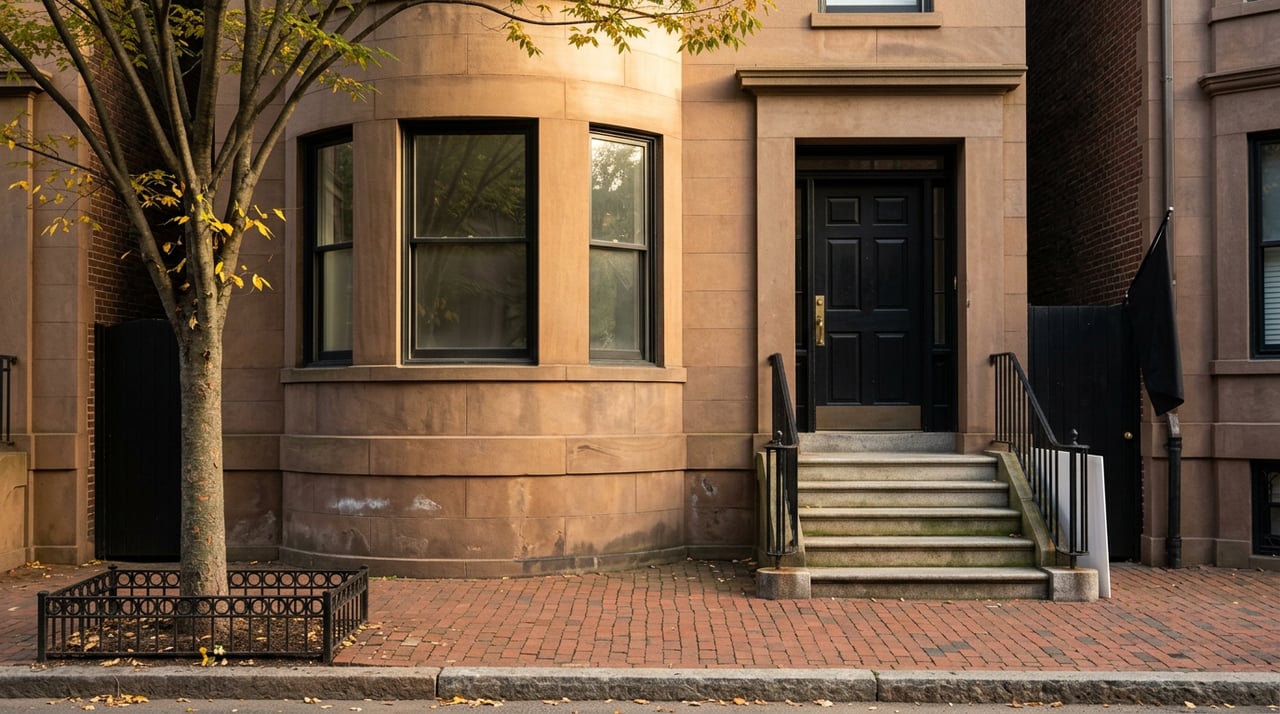
The trigger is specific. A building qualifies for review if it was constructed in whole or in part by 1945, or is of unknown age, and it meets at least one additional test: listing on or eligibility for the National Register of Historic Places, inclusion in a designated significant area, or documentation on the town's Cultural Resources Inventory. The review applies to full teardowns and to partial demolition, which the town defines broadly enough to include exterior changes like new siding, window replacements, and additions, particularly anything visible from the street.
The process itself moves in defined steps. The Building Inspector forwards a demolition application to the Historical Commission, which has twenty-one business days to hold an initial determination meeting. If the Commission finds the building significant, a public hearing follows within thirty days, with neighbors notified and the hearing advertised locally. Most partial demolition applications get resolved at that hearing. Full teardowns can trigger the full twelve-month negotiation window, during which the town works with the owner to explore alternatives to demolition.
The town's own procedures page is careful to note that delays are seldom imposed, and when they are, they rarely run the full twelve months. This isn't a bylaw designed to trap buyers. It's designed to buy time for a conversation about a house's history before the house is gone. But a conversation that adds even sixty days to a renovation timeline matters if you've already signed a contractor and budgeted a move-in date.
A recent Weston Observer feature captured why this bylaw exists in the first place. Historical Commission co-chair Phyllis Halpern described how the town's postwar building boom, and the decades of teardown-driven construction that followed it, have shaped Weston's mix of architectural eras.
"Many neighborhoods and subdivisions were constructed in the middle part of the 20th century. After those neighborhoods and subdivisions got established, much of the building after that period involved teardown."
Weston Historical Society president Pam Fox, author of the definitive local history Farm Town to Suburb, has spent decades tracking exactly this pattern, and the town's ongoing effort to establish a local historic district around Kendal Common, alongside the existing Crescent Street Local Historic District, shows the preservation conversation is still active, not archived in a filing cabinet.
Here's the part that surprises buyers coming from towns with municipal sewer. Weston has no public sewer network. Every home in town, from a starter Colonial to a multi-acre estate, treats its own wastewater through a private septic system regulated under the state's Title 5 code. The town does supply public drinking water through its Water Division, which draws from the MWRA system, so buyers often assume wastewater works the same way. It doesn't. Water comes from the town. Everything that goes down a drain stays on your lot.
Title 5 sizes a septic system around a single number: design flow, calculated at 110 gallons per day for every bedroom on the property, according to state guidance from the Massachusetts Department of Environmental Protection. That number, not square footage, not bathroom count, is what determines whether your system can legally support the home you want to build. Add a bedroom, and you've added flow. Add flow beyond what the system was designed to handle, and the Board of Health has to sign off on an upgrade before a building permit gets issued.
This is why septic capacity, not lot size, has become something Weston sellers actively market. It isn't unusual to see a recently upgraded septic system called out as a selling point on larger listings, because a system already sized for more bedrooms is proof that a buyer's expansion plans are already cleared, rather than a question mark waiting in the permitting queue.
Weston's Building Department adds one more layer worth knowing before you commit to a specific lot. Title 5 requirements get stricter for any project inside the Cambridge Water Supply Zone, a designation that covers part of town. A septic design that would pass easily elsewhere in Weston may face tighter setbacks and design standards inside that zone.
The real complication shows up when both mechanisms apply to the same house, which happens more often in Weston than buyers expect, given how much of the town's housing stock predates 1945.
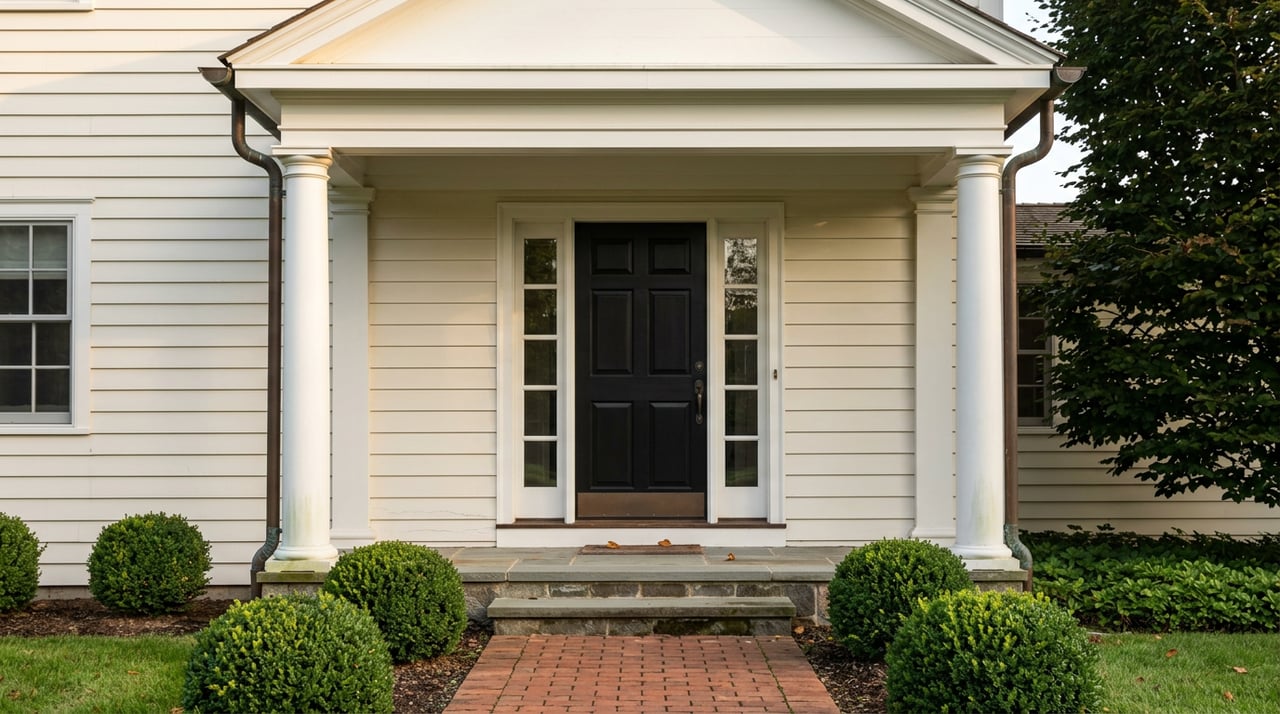
Picture a classic scenario: an antique Colonial on two acres, built in the 1920s, listed as a renovation opportunity. A buyer plans to add a primary suite and two bedrooms, maybe convert part of the footprint into a larger kitchen wing. Before that buyer can pull a building permit, two separate reviews may need to run in parallel. The Historical Commission has to weigh in on whether the exterior changes and any partial demolition trigger the twelve-month delay provision. Separately, the Board of Health has to confirm the existing septic system can support the new bedroom count, or approve a redesign if it can't.
Neither review depends on the other, and neither depends on how much land surrounds the house. A two-acre lot doesn't exempt a pre-1945 structure from historical review, and it doesn't add design flow capacity to an undersized septic system. The acreage buys you setback room and privacy. It doesn't buy you a faster permit.
| Constraint | Who decides | What it controls | What acreage does NOT fix |
|---|---|---|---|
| Demolition Delay Bylaw | Weston Historical Commission | Timeline for demolition or exterior changes to pre-1945 buildings | Whether a building is deemed significant |
| Title 5 septic design flow | Weston Board of Health | Maximum bedroom count the property can legally support | Whether the existing tank and leach field can handle more flow |
For anyone seriously considering a renovation or rebuild on an older Weston property, a short list of questions can save months of surprise later:
None of this is a reason to walk away from an older Weston home. It's a reason to ask these questions before the inspection contingency expires, not after.
This is exactly the kind of groundwork that separates a smooth renovation from a stalled one, and it's where hands-on project experience earns its keep. Knowing which questions to ask the Board of Health, and how to read a Cultural Resources Inventory listing before it becomes a permitting surprise, is part of what makes a purchase in one of Weston's older neighborhoods feel manageable instead of uncertain.
If you're weighing a renovation project against Weston's broader luxury market, our guide to understanding Weston's luxury real estate market and our look at how lot size and privacy shape home values both add useful context. You can also browse current Weston homes for sale to see what's on the market right now.
Does the demolition delay bylaw apply to additions, or only full teardowns? Both. The Historical Commission reviews partial demolition, which includes exterior changes like new siding, window replacements, and additions, with particular attention to anything visible from the street. A full interior renovation that doesn't touch the exterior generally falls outside its scope.
If a home already has a large septic system, does that guarantee I can add bedrooms? Not automatically. What matters is the system's approved design flow and whether it includes a reserve area for expansion. The Board of Health confirms this on a case by case basis, and a system built to an older code may need a full upgrade even if the tank itself looks generously sized.
Can I just buy more land to get around either restriction? No. Lot size affects setbacks and how a house sits on the property. It has no bearing on whether the Historical Commission finds a pre-1945 building significant, and it doesn't change the design flow calculation that governs septic capacity.
Every renovation in Weston has its own mix of timeline and capacity questions, and the answers are knowable well before closing if you know where to look. If you're weighing an older Weston property and want a clear read on what a renovation timeline actually looks like, Jamie Grossman Real Estate can help you get answers before you write the offer, not after. Request a personalized home valuation to start the conversation.
Stay up to date on the latest real estate trends.