Weston MA Luxury Real Estate: A Smart Market Guide
February 19, 2026
February 19, 2026
Looking for privacy, acreage, and a refined lifestyle close to Boston? Weston stands out as one of Metro West’s most coveted luxury markets, with large lots, quiet streets, and homes that pair substance with style. If you’re weighing Weston against nearby towns or trying to pin down a smart budget, you want clear, current guidance, not guesswork. In this guide, you’ll learn what “luxury” means in today’s Weston market, how zoning and conservation shape value, and how to approach a search with confidence. Let’s dive in.
Weston is a high-value, low-inventory town where well-positioned homes move quickly. Local reporting on 2025 sales shows a median sale price of $2.3 million across 167 transactions, with 15 sales above $5 million and a top sale of $14.3 million. These figures come from a Warren Group MLS analysis summarized by the Weston Observer and supported by local broker interviews. You can review the full overview in the Weston Observer’s 2025 market recap.
Index models from national aggregators tell a complementary story. Typical Weston home values tracked by index products are in the low $2 million range, and other providers commonly show medians across roughly $1.8–$2.4 million depending on the method used. The key is to distinguish two views: the median of recent sales reflects what buyers actually paid, while index values (like AVMs) estimate “typical” value levels across the entire housing stock.
Inventory remains tight. Recent snapshots show months of supply in the low single digits and median days on market in the low double digits. Well-priced, turnkey properties in prime locations can receive early interest and move swiftly, while highly specialized or very high-priced estates may take longer to find the right buyer.
A big part of Weston’s appeal is structural. Zoning, conservation, and infrastructure collectively preserve a low-density, estate-scale character that few Greater Boston suburbs can match.
Weston’s single-family districts require large minimum lot sizes. The town’s zoning table lists minimum areas of 60,000 sq ft in District A, 40,000 sq ft in B, 30,000 sq ft in C, and 20,000 sq ft in D, plus substantial frontage and setbacks. That translates to approximately 1.38 acres, 0.92 acre, 0.69 acre, and 0.46 acre. Even the smallest single-family zone typically yields a half-acre or more, which helps maintain privacy and supports long-term value on larger parcels. Review the town’s zoning requirements for details.
Weston stewards roughly 1,800–2,000 acres of conservation land with about 100 miles of trails, which creates a strong buffer of protected open space throughout the town. Many homes back to conservation areas, reinforcing privacy and a wooded, rural feel just outside the city. Learn more on the town’s Conservation page.
Local wetlands protections are an active part of development and renovation. Many properties require wetlands delineation, buffer setbacks, and Conservation Commission review before additions or site work can proceed. This adds steps, time, and cost to new construction or significant remodels, especially on sensitive lots. Read Weston’s Wetlands Protection Bylaw and Regulations to understand the process.
Most Weston homes rely on private septic rather than a town sewer system. If you plan to expand or build new, expect to complete Title 5 septic design and approvals, soil testing, and capacity verification. This is a normal part of due diligence for luxury properties on larger parcels and should be scoped early in your planning.
Luxury buyers in Weston often choose between state-of-the-art new builds and historic or traditional estates that blend character with scale. Each path offers specific advantages.
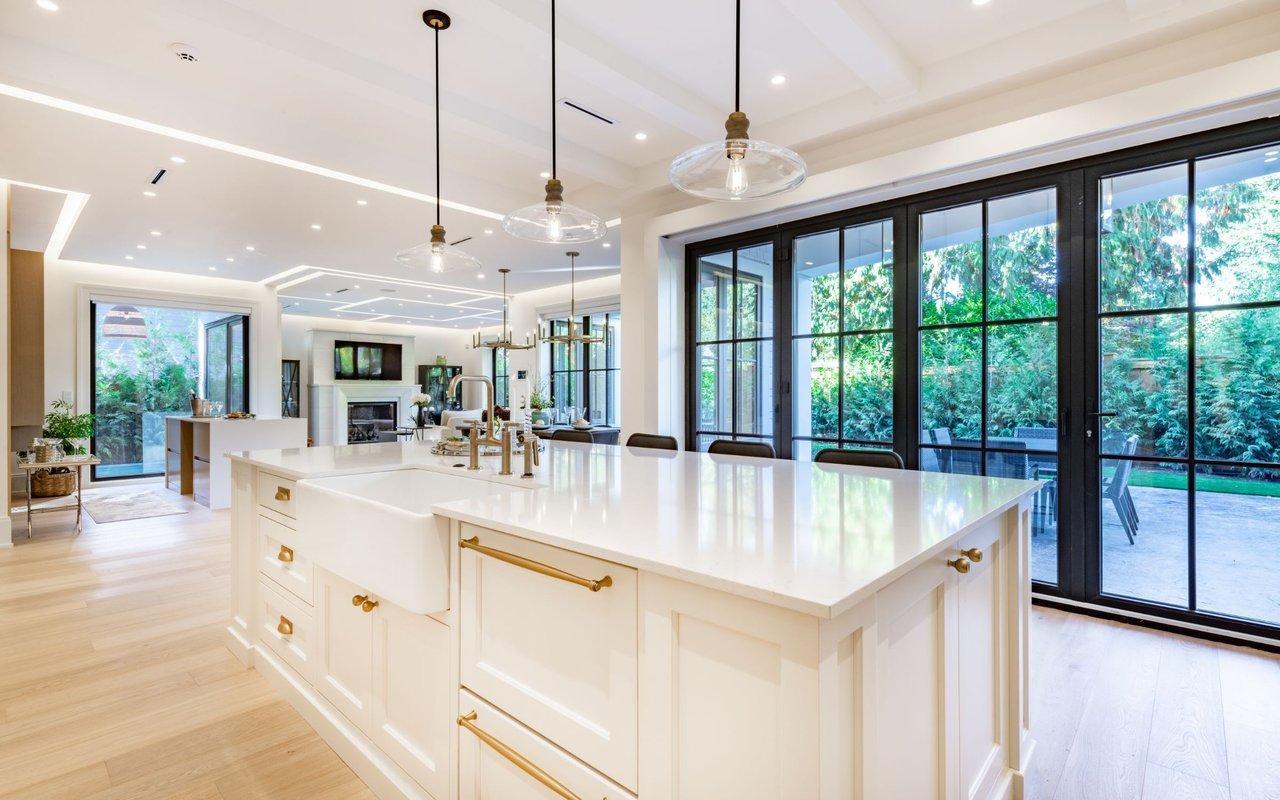
New builds typically range from about 5,000 to 10,000-plus square feet, with flexible floor plans and amenity packages that fit current lifestyles. Common features include home offices, wellness or gym spaces, theater rooms, multi-bay garages, and integrated smart-home systems. Buyers who prefer immediate usability and modern systems often prioritize new construction for its performance, energy efficiency, and low near-term maintenance.
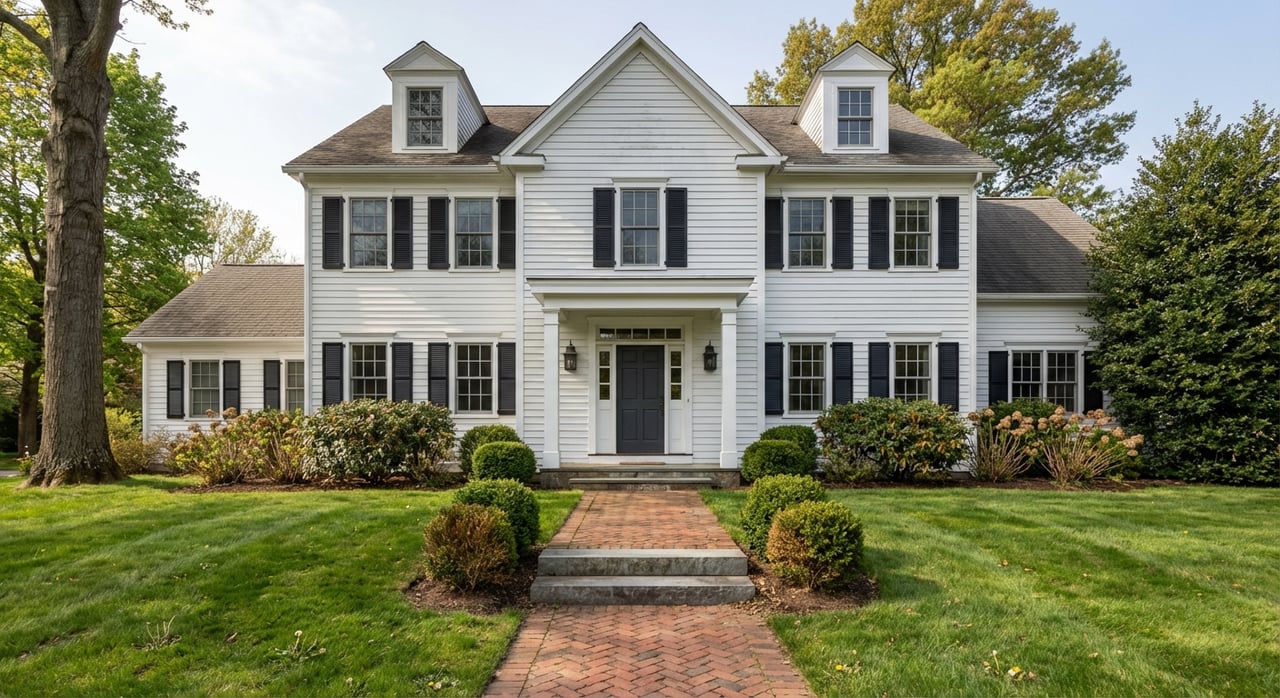
Shingle, Colonial, and Georgian-style homes on 2-plus acre parcels deliver mature landscapes, stonework, and architectural detail that is difficult to replicate. Some properties are sensitively renovated to today’s standards, while others may be candidates for comprehensive updates. Pockets of town character, such as the Sudbury Road Area, help preserve this timeless feel.
If you are also exploring Wellesley or Newton, it helps to think in terms of your top priorities and how each town aligns with them.
All three towns draw families who value strong public schools. Weston Public Schools are consistently among the top-ranked districts in Massachusetts. For a neutral third-party snapshot, review Niche’s Weston High School profile. Always verify current school assignments and boundaries with the district before you buy.
Use your top priority as the decision lens: if you value acreage and privacy above all, Weston usually rises to the top. If walkability and in-town amenities are essential, Wellesley often fits well. If the shortest commute and a range of neighborhood types are your focus, consider Newton.
A focused plan helps you move decisively in a low-inventory luxury market. Start with these steps.
Decide where you want to be relative to Weston’s current median. The $2.3M median sale price sets a useful benchmark for what active buyers encounter. Remember that index values and average prices describe the broader housing stock, not just current sales. See the Weston Observer’s 2025 analysis for context.
Ask which zoning district a property sits in and check the dimensional requirements for lot area, frontage, and setbacks. Zoning controls privacy, potential expansion, and any future subdivision options. The town’s zoning table is your quick reference.
If a property includes or abuts wetlands, you will likely need delineation and Conservation Commission review for additions or site work. Build these steps into your timeline. Review Weston’s Wetlands Protection resources to understand the process.
Confirm existing septic capacity and plan for Title 5 design if you expect to expand. This is a standard part of buying on larger lots in Weston and should be addressed during due diligence and offer planning.
Permitting for new construction or substantial renovation can take 6 to 12 months or more, especially when wetlands or variances are involved. Starting early with a local builder and engineer who know Weston’s process helps you move efficiently.
Local reporting notes a significant share of cash purchases and large down payments in Weston. Your financing and contingency strategy should be tailored to compete in this environment. Align your pre-approval or proof-of-funds with your target tier before you tour.
Even in a small district, confirm the current school assignments for a specific property. Third-party rankings provide broad context, but the district provides the final word on boundaries each year.
If Weston’s blend of acreage, privacy, and elite housing options fits your vision, a calm, experienced guide will help you make a confident move. With 30+ years advising Metro West buyers and sellers, hands-on renovation expertise, and boutique-level marketing support, we can align your search with the right properties, due diligence steps, and offer strategy. To start a focused conversation tailored to your goals, reach out to Jamie Grossman.
Stay up to date on the latest real estate trends.