Living in Sudbury MA: Trails, Neighborhoods, and Character
April 16, 2026
April 16, 2026
If you are thinking about a move to Sudbury, one of the first things you may notice is that it does not feel like a one-note suburb. Its character comes from a mix of spacious residential areas, protected open land, historic districts, and a commercial corridor that supports everyday life. If you want a clearer sense of how Sudbury feels from place to place, this guide will help you understand the town’s neighborhoods, trails, and defining features so you can picture daily life with more confidence. Let’s dive in.
Sudbury is a small but affluent Middlesex County town with an estimated 19,805 residents in 2024. According to the U.S. Census QuickFacts for Sudbury, the town also has a high owner-occupied housing rate of 89.9%, a median household income of $234,634, and a median owner-occupied home value of $939,400.
Those numbers line up with what many buyers experience on the ground. Sudbury is largely residential, low-density, and oriented around detached homes rather than a compact downtown setting. The town’s age profile also leans family-oriented, with 28.5% of residents under 18.
If you are comparing Sudbury with other Metro West communities, housing style is an important part of the picture. The town’s 2021 Master Plan baseline report notes that detached single-family homes made up 89% of housing units in 2017, even though attached and multifamily options had increased modestly over time.
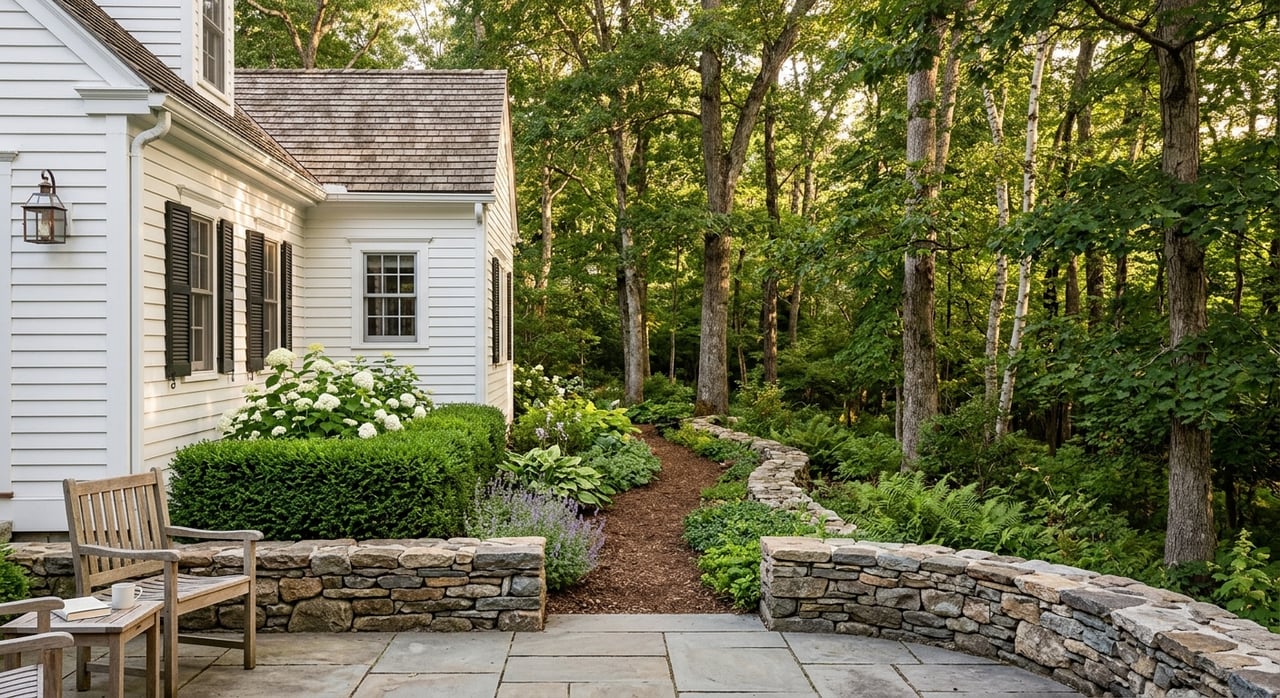
That means you will still find a strong single-family identity across town. Sudbury’s broader Master Plan describes most residential areas as single-family homes on one- to two-acre lots, with a more rural-residential pattern near the historic Wayside Inn where lots are often five acres or larger.
For buyers, that often translates into a sense of space, privacy, and greenery. For sellers, it helps explain why setting, land, and overall presentation can play such a big role in value.
Sudbury is not divided into neighborhoods in the same way as a city, but it does have distinct areas that shape how the town is experienced.
The Town Center is one of Sudbury’s historic anchors. The town’s Historic Districts Commission identifies this district with landmarks such as the Loring Parsonage, First Parish Meeting House, Presbyterian Church, and Grange Hall.
The town’s historical summary describes the Town Center as running along Hudson and Concord Roads. This area reflects Sudbury’s civic and historic identity and gives the town a sense of continuity that newer suburban communities often do not have.
Western Sudbury has a distinctly rural-historic feel around the Wayside Inn. The historic district description includes Longfellow’s Wayside Inn, the Redstone Schoolhouse, the grist mill, and the Martha Mary Chapel.
This part of town helps define Sudbury’s semi-rural character. With larger lots noted in the Master Plan and a landscape shaped by preserved roadsides and open land, it can feel especially spacious and scenic.
South Sudbury includes the King Philip historic district, another area highlighted in the town’s historical overview. While each area of Sudbury is connected by the town’s larger residential pattern, the historic districts help give certain sections a more defined identity.
For many buyers, these distinctions matter less in terms of formal boundaries and more in how each area feels. Some parts of town feel more classically residential, some more rural, and some more tied to historic landmarks and town institutions.
One surprise for some newcomers is that a town known for open space still has a clear center of daily convenience. The Master Plan baseline report identifies Route 20/Boston Post Road as Sudbury’s main commercial hub, with Meadow Walk as a major mixed-use node along that corridor.
That matters in practical terms. You may live in a setting that feels quiet and spacious while still having shopping, services, and dining concentrated in a more accessible corridor. It is one of the features that helps Sudbury balance semi-rural character with everyday convenience.
For many people, Sudbury’s trail system is one of the town’s biggest draws. Conservation and recreation are central to local identity, and the town has invested heavily in protecting land, water, and habitat.
The Conservation Commission’s town-wide land map lists a wide range of town-owned conservation properties, including Barton Farm, Broadacres Farm, Davis Farm, Frost Farm, Haynes Meadow, Hop Brook Marsh, King Philip Woods, Lincoln Meadows, Nobscot, Piper Farm, Poor Farm Meadow, and Tippling Rock Trail.
Many of these areas support hiking, and some also allow biking, cross-country skiing, horseback riding, or limited camping. The broader conservation lands page also points to nearby resources such as the Assabet River National Wildlife Refuge, Great Meadows National Wildlife Refuge, Marlborough-Sudbury State Forest, the Sudbury River, and several Sudbury Valley Trustees properties.
Sudbury’s trail system is not just a collection of isolated parcels. The 2021 Master Plan notes an extensive network that connects places such as Hop Brook, Tippling Rock, Barton Farm, Nobscot, Davis Farm, and Lincoln Meadow.
That connectivity helps shape everyday life. Depending on where you live, access to trails and open space may be part of your regular routine rather than a special destination.
Another major outdoor and transportation feature is the Bruce Freeman Rail Trail. According to the town’s planning department update, the full regional trail is planned to run 25 miles from Lowell to Framingham, and the Sudbury segment covers about 4.4 miles from South Sudbury near Route 20 to the Concord line.
The same town update notes that Sudbury’s Rail Trails Advisory Committee oversees both the Bruce Freeman Rail Trail and the Mass Central Rail Trail. For residents, these projects add another layer of connectivity and outdoor access that supports walking, biking, and recreation.
Sudbury’s recreation profile goes beyond conservation land. The town also offers organized recreation facilities, including Atkinson Pool at Fairbank Community Center, which includes an 8-lane lap pool and a separate diving well.
Athletic facilities such as Haskell Field, Feeley Field, and Featherland Park also contribute to the town’s active lifestyle. If you are trying to picture day-to-day living, it helps to see Sudbury as a place where natural open space and formal recreation both play meaningful roles.
One of the clearest themes in Sudbury is stewardship. The town does not just happen to have historic and natural resources. It actively works to preserve them.
Sudbury’s Scenic Roads Bylaw is designed to protect roadway character, including stone walls, tree canopies, and views of marshland, mill ponds, farmland, and historic buildings. The town also finalized a Historic Preservation Plan in 2022 to integrate preservation into long-term planning.
This planning framework helps explain why Sudbury feels so consistent from one area to another. Even as the town evolves, there is a clear public effort to protect the landscape and built character that residents value.
For many buyers, schools are one part of understanding how a town functions day to day. Sudbury Public Schools serves four elementary schools, Haynes, Nixon, Noyes, and Loring, as well as Ephraim Curtis Middle School. High school students attend Lincoln-Sudbury Regional High School, a separate district located on Lincoln Road in Sudbury.
The district’s public information emphasizes academic and personal growth, inclusion, and partnership with families and the broader community. More broadly, Sudbury’s civic identity appears closely tied to preservation, community institutions, and access to open space, which together shape the town’s daily rhythm.
If you are exploring Sudbury as a buyer, it helps to think in terms of lifestyle patterns rather than just map boundaries. You are likely to find a town defined by spacious single-family housing, strong open-space access, historic landmarks, and a commercial corridor that supports everyday errands and services.
If you are selling in Sudbury, those same qualities often shape how your home should be positioned. Lot setting, privacy, access to trails or town amenities, and the feel of the surrounding area can all influence how buyers respond.
Sudbury is especially appealing to people who want room to spread out without losing touch with community structure. It offers a blend of preserved landscape, historic character, and practical convenience that is increasingly hard to find in Greater Boston.
If you are considering a move in Sudbury or anywhere in Metro West, working with an advisor who understands how buyers evaluate town character, setting, and long-term value can make the process far more strategic. To talk through your goals, connect with Jamie Grossman.
Stay up to date on the latest real estate trends.